
Endotoxin testing is not optional for any peptide headed into cell culture or an endotoxin-sensitive assay. It is the difference between a clean result and weeks of unexplained cytokine noise or a compromised assay system. Before anything is reconstituted, pull the certificate of analysis (COA) for the batch and check it for a numerical LAL result in EU/mL or EU/mg, plus the method used (USP <85> gel-clot, kinetic chromogenic or rFC). Peptelia tests every batch in its own laboratory by HPLC and UV/Vis as standard and adds endotoxin testing depending on the product, so check the batch-specific COA for this value; for these laboratory applications, a numerical result is the baseline every supplier should meet.
TL;DR:
- Endotoxin contamination enters peptides mainly through water sources during manufacturing, not through amino acids or raw materials.
- Validating method suitability for each peptide matrix is essential to avoid false results caused by reaction inhibition or enhancement.
- For cell culture and other endotoxin-sensitive assays, suppliers should provide detailed, batch-specific numerical endotoxin results, including detection limits and method validation, so that a proper assessment is possible.
- Routine processes such as HPLC sanitisation, validated water systems and proper handling are critical to preventing endotoxin build-up in peptides.
- The assay limit depends on the method and the experimental setup, which is why endotoxin units must be converted (EU/mL, EU/mg, EU per preparation) and interpreted carefully.
Table of contents
- What endotoxins are and why they matter for peptide research
- How peptides get contaminated: from synthesis to shipping
- Testing methods: LAL, rFC, MAT and why method suitability isn’t optional
- Reading the numbers: EU/mL, EU/mg and assay limits
- How to read a COA and what to actually ask for
- Preventing contamination: controls that actually work
- Prepping peptide samples before you test for endotoxin
- Why peptide samples give false readings and how to fix it
- Validating an endotoxin method for a new peptide
- When endotoxin contamination slips through: what happened and what changed
- Your procurement checklist before you buy
- What actually matters once you look past the standard advice
- Sources
What endotoxins are and why they matter for peptide research
Endotoxin, more precisely lipopolysaccharide (LPS), is a structural component of the outer membrane of Gram-negative bacteria. It survives autoclaving, sterile filtration and most terminal sterilisation steps that kill the bacteria themselves. That is exactly the trap: a peptide can pass a USP <71> sterility test and still carry a pyrogenic load, because sterility testing detects living organisms, whereas endotoxin testing measures a heat-stable toxin those organisms left behind.
In vitro, LPS binds to TLR4 receptors on macrophages and other immune cells and triggers a cytokine release that can drown out any signal you are trying to measure in a metabolic or neurocognitive assay. Even small amounts of endotoxin can distort cell-based assays, which is why strict limits apply to sensitive laboratory preparations.
HPLC purity testing tells you how much of the material is actually the peptide you ordered. It says nothing about bacterial contamination. Endotoxin testing, sterility testing and purity testing answer three separate questions, and for cell culture work a supplier that answers only one of them is giving you an incomplete picture.
How peptides get contaminated: from synthesis to shipping
Endotoxin usually does not come from the amino acid building blocks. It comes from water. Every aqueous step in peptide manufacturing – buffer preparation, HPLC mobile phases, resin washes – is a potential point of entry if the water system is not validated to the water for injection (WFI) standard.
Manufacturing controls matter more here than is often assumed, because a single unsanitised HPLC column can introduce endotoxin into an otherwise clean batch, and freeze dryers with a poor maintenance history can reintroduce contamination during the final drying step. Packaging and handling by staff also play a role. A vial that is sealed in an uncontrolled environment or touched without gloves during transfer picks up bioburden that will show up in the next LAL test.
When qualifying a supplier, ask about these specific points:
- Water system qualification (WFI grade or equivalent, with validation records)
- HPLC column sanitisation protocol and frequency
- Cleanroom classification for filling and lyophilisation steps
- Depyrogenation procedures for glassware and vial stoppers
- Gowning and hygiene protocols for staff in the processing area
A supplier that can only answer these questions in general terms rather than specifically has not thought through where its own risk actually lies.
Testing methods: LAL, rFC, MAT and why method suitability isn’t optional
The Limulus amebocyte lysate (LAL) test is still the workhorse. It comes in three variants. Gel-clot is qualitative and inexpensive, suitable for pass/fail screening but not for a precise value. Turbidimetric and kinetic chromogenic methods are quantitative, and kinetic chromogenic platforms reach detection limits of roughly 0.005 to 0.01 EU/mL – the resolution you need for a tight cell culture specification.
Recombinant factor C (rFC) assays are the animal-free alternative and use a single recombinant protein instead of horseshoe crab lysate. That is precisely why they are gaining ground, and they are increasingly used alongside or instead of LAL in labs that want to move away from lysate sourcing. Monocyte activation tests (MAT) go a step further and measure the actual human cytokine response, which makes them more biologically relevant for pyrogenicity, but slower and more resource-intensive.
None of these methods works out of the box on a peptide sample. Peptides can inhibit or enhance the LAL reaction, either masking real contamination or producing a false positive, which is why method suitability testing (inhibition and enhancement) must be validated for each peptide matrix before you can trust the reported value. Skip this step and the result is a guess with a decimal point.
Here is what that process looks like in practice:
- Dilute the sample to the maximum valid dilution that overcomes matrix interference.
- Spike a known endotoxin concentration into the diluted sample and confirm that recovery falls between 50 and 200 percent of the expected value.
- Measure the actual test sample at the confirmed dilution against a validated standard curve.
- Report the result in EU/mL, then convert it to EU/mg using the known peptide concentration of the sample.
Turnaround for a validated kinetic chromogenic run is typically a few business days once method suitability is documented, and shorter if the supplier already holds suitability data for that specific peptide.
Pro tip: Don’t just ask for the endotoxin value – ask for the method suitability report behind it. A value without validated recovery data can hide real contamination or signal a false positive, and without seeing the suitability test there is no way to tell which of the two applies.
Reading the numbers: EU/mL, EU/mg and assay limits
An endotoxin unit (EU) measures biological activity, not mass. It is a functional measure of how much pyrogenic response a sample would trigger, which is why converting between EU/mL (what the assay actually measures) and EU/mg (what the endotoxin-load calculation for a preparation needs) requires knowing the exact peptide concentration.
Cell culture work usually applies a strict assay limit, often 0.5 EU/mL or less, because even sub-threshold endotoxin can activate macrophages in the dish and skew the result. Treat any specific limit as a starting point to be checked against your own institution’s protocol and the specification of the assay in question, not as a universal rule.
A worked example makes this concrete:
- COA value: <0.1 EU/mg peptide.
- Endotoxin load per preparation = COA value × mg peptide in the preparation: EU/mg × mg peptide = EU per preparation. At 0.1 EU/mg and 2 mg peptide, this gives 0.2 EU; at 60 mg, the same batch contributes 6 EU.
- Comparison with the assay limit: the EU per preparation are held against the limit of the assay in question (e.g. in EU/mL after dilution to the final volume). 0.2 EU leaves room in many cell culture setups, whereas 6 EU may already exceed the limit.
The second line is the trap. A specification such as “<0.1 EU/mg” sounds reassuring on its own, but it only tells you something useful once it is multiplied by the amount of peptide you actually weigh into the preparation. A peptide that looks clean at a small weigh-in can reach the assay limit at a large one. Check the assay’s limit of quantification as well. If the reported value reads “<0.1 EU/mg” because that was the lowest concentration the assay could detect, rather than because it was measured at exactly that level, the safety margin is smaller than it looks.
How to read a COA and what to actually ask for
A certificate of analysis (COA) is only as useful as what it actually reports. Before trusting a COA, check these five points:
- A numerical LAL or rFC value, not a checkbox or a pass/fail stamp without a number
- Units clearly stated as EU/mL or EU/mg, with enough concentration data to convert between them
- The method name (USP <85>, kinetic chromogenic, rFC) and the assay’s detection limit
- The identity of the testing lab and the test date
- A batch number that matches the product you actually received
Blank LAL fields on COAs are more common than researchers expect, and a blank field is not a pass. It usually means the test simply was not run. Reject any COA with an undated report, a batch number that does not match the shipment, or a bare “endotoxin-free” statement without a supporting number. When contacting a supplier, ask directly: “Can you provide the numerical LAL result and the method suitability data for this specific batch, matching the batch number on my shipment?” A supplier with real testing infrastructure will answer that in a single email. Peptelia’s approach to quality and lab testing is built on batch-specific documentation, with endotoxin testing added depending on the product.
Preventing contamination: controls that actually work
Manufacturing controls come first. That means qualified raw materials, WFI-grade or validated water systems throughout, dedicated low-bioburden processing lines, and a documented cleaning and depyrogenation schedule for equipment and columns. HPLC column sanitisation and consistent cleaning validation are among the most effective controls a manufacturer can run, because columns are reused across batches and carry contamination forward if they are not properly maintained.
Next come analytical controls: validated method suitability for each peptide matrix, quantitative LAL or rFC as the default rather than a qualitative gel-clot screen, and MAT reserved for cases where human-relevant pyrogenicity data genuinely matter.
Lab handling is the part researchers control directly. Use depyrogenated glassware, work strictly aseptically during reconstitution, track batches carefully so that a contamination event can be traced back to a specific shipment, and run your own spot QC checks on incoming material rather than assuming the COA tells the whole story. None of this eliminates the risk entirely, but each layer removes a specific point of failure.
Prepping peptide samples before you test for endotoxin
Sample preparation errors are a common reason why a clean peptide appears contaminated, or vice versa. Reconstitution comes first: use LAL reagent water, never tap water or ordinary deionised water, because standard lab water routinely contains trace endotoxin that skews the reading before the assay even starts.
Dilution technique matters just as much. Peptides at high concentration often interfere with LAL chemistry, so dilute to the maximum valid dilution established during method suitability testing, not to an arbitrary round number. Dilute too little and interference distorts the result; dilute too much and you risk pushing the true endotoxin content below the assay’s detection limit, producing a falsely “clean” reading.
Handle samples in a designated low-endotoxin work area, ideally with the same depyrogenated glassware used for the suitability test, and avoid glass or plastic ware that has not been rinsed with pyrogen-free water. Even a supposedly clean pipette tip can introduce measurable endotoxin if it was not manufactured or stored under controlled conditions.
Timing matters too. Reconstituted peptide solutions should be tested promptly or stored frozen, because some peptide solutions allow slow microbial growth at refrigerator temperature over extended periods, which can raise endotoxin levels between reconstitution and testing. Record the reconstitution date, diluent batch and storage conditions alongside the test result. If a result looks odd later, that record is what lets you work out whether the peptide, the water or the storage window was the cause.
Why peptide samples give false readings and how to fix it
Peptides interfere with LAL chemistry in two directions, and both produce misleading numbers if they go unnoticed. Inhibition occurs when the peptide or its buffer suppresses the clotting cascade, masking real endotoxin and producing a falsely low or negative result. Enhancement occurs when something in the sample accelerates the reaction and produces a falsely elevated reading that looks like contamination when there is none.
High peptide concentration is the most common culprit, along with certain buffer salts, chelating agents such as EDTA, and residual organic solvents from HPLC purification. Beta-glucans from cellulose-based filters or packaging materials can also trigger a false positive specifically in LAL assays, because the cascade responds to glucans as well as endotoxin.
The fix is the spike recovery protocol built into method suitability testing: a known amount of endotoxin is added to a diluted sample, and you confirm that the assay recovers 50 to 200 percent of that known amount. If recovery falls outside this range, the sample must be diluted further or a different assay format chosen altogether. For peptides that keep interfering even at high dilution, rFC assays sometimes sidestep the problem because they rely on a single recombinant protein reaction rather than the multi-enzyme cascade of LAL; however, rFC also requires its own suitability validation before the reported value can be trusted.
Validating an endotoxin method for a new peptide
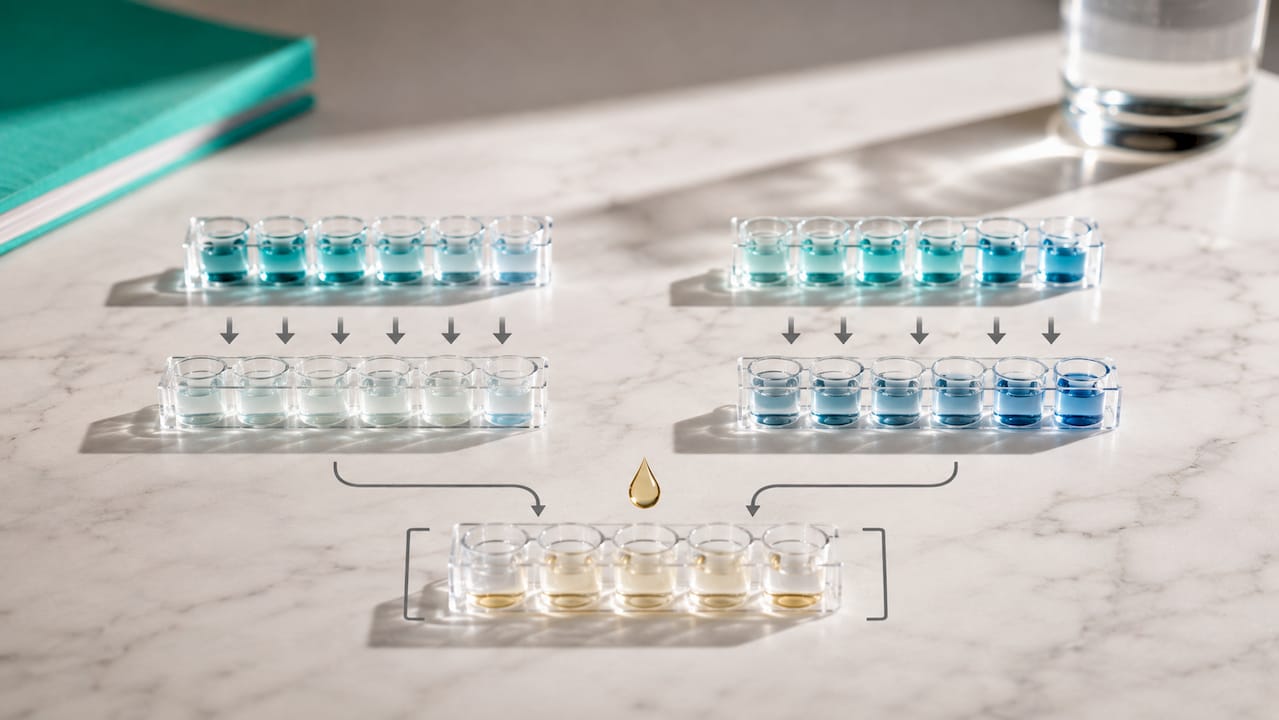
Every new peptide matrix needs its own validation before any endotoxin value derived from it can be trusted, and skipping this step is where most bad data comes from. Sensitivity validation confirms the assay’s lowest reliable detection point against the standard curve, with at least three to five replicate runs to show that the lowest reportable value is real and not assay noise.
Specificity validation is where the inhibition and enhancement testing described earlier does its real work: it confirms that the assay responds specifically to endotoxin and not to something else in the peptide’s buffer or formulation. Robustness testing goes further: does the assay hold up across different analysts, different lots of LAL reagent and small variations in incubation temperature or time? A method that only works in one technician’s hands on one day is not validated – it is a lucky result.
For peptides heading towards regulated use, the validation documentation should include the specific dilution scheme used, spike recovery data at that dilution, and a defined acceptance range for future batch testing. That package turns a one-off test result into a repeatable, defensible method that a quality auditor or expert reviewer can actually assess independently.
When endotoxin contamination slips through: what happened and what changed
Endotoxin failures rarely come down to a single dramatic mistake. They come down to a process gap that nobody flagged until the data came back strange. A research team seeing unexplained cytokine activity in several control wells of a cell culture assay eventually traces the problem to reconstitution water that was not LAL grade, not to the peptide itself – a distinction that only becomes clear once someone actually tests the water independently of the peptide.
In a manufacturing context, one documented pattern involves HPLC columns that pass an initial sanitisation check but accumulate biofilm over dozens of production runs, gradually raising endotoxin levels batch by batch until a routine LAL test finally catches an out-of-specification value. The fix in such cases is procedural: fixed column replacement intervals instead of condition-based judgement calls, and tighter in-process testing rather than relying on release testing alone to catch a slow drift.
The pattern across these incidents is consistent. The purity of the peptide itself was rarely the real problem. The contamination came from water, equipment or handling somewhere upstream, and only surfaced because someone insisted on a numerical endotoxin result instead of accepting a clean-looking purity chromatogram as sufficient evidence. That is the case for treating endotoxin testing as a separate checkpoint for cell culture work rather than an assumption that rides on good HPLC data.
Your procurement checklist before you buy
Before ordering, confirm that the supplier provides: a numerical LAL or rFC value, the method name and detection limit, a batch number that matches every document you receive, batch-specific HPLC purity data with a disclosed method and a named testing lab (an external second analysis is a useful additional safeguard), and a test date recent enough to reflect the batch you are actually buying. If the peptide is going into a sterile application, a sterility statement should also be available.
Build this checklist directly into your lab’s purchase approval process, and trust is replaced by a paper trail you can actually audit.
What actually matters once you look past the standard advice
Most guides on this topic treat endotoxin testing as a compliance checkbox: get the number, file it, move on. That is backwards. The number only matters once you have done the maths that connects it to the actual experiment, the weigh-in and the assay limit. A “<0.1 EU/mg” specification that looks reassuring on a product page can become a significant share of the assay limit when scaled to a preparation with a high peptide weigh-in, and most researchers never run that calculation until something goes wrong.
The conventional advice also underrates method suitability. Everyone asks for the LAL value. Almost nobody asks whether that value comes from a validated matrix or from a generic assay run with no spike recovery confirmation. That is the gap that creates false confidence: a clean-looking result from an assay that was never shown to work on that specific peptide.
If you take away only one thing from this post, make it this: the suitability data matter more than the headline number. A validated result of 0.08 EU/mg is worth more than an unvalidated “<0.05”. Ask suppliers for both every time – and a refusal to provide suitability data is an answer in itself.
— Max
For research use only (Research Use Only) – not for use in humans or animals.
Sources
- Highly sensitive endotoxin assay combining peptide/graphene oxide and DNA-modified gold nanoparticles – PMC
- Low endotoxin peptide manufacturing: What ‘<0.1 EU/mg’ really means for your project | Kilo Biotechnology
- Controlling endotoxin contamination during peptide manufacturing
- Endotoxin Testing for Peptides





